The "Success Problem"
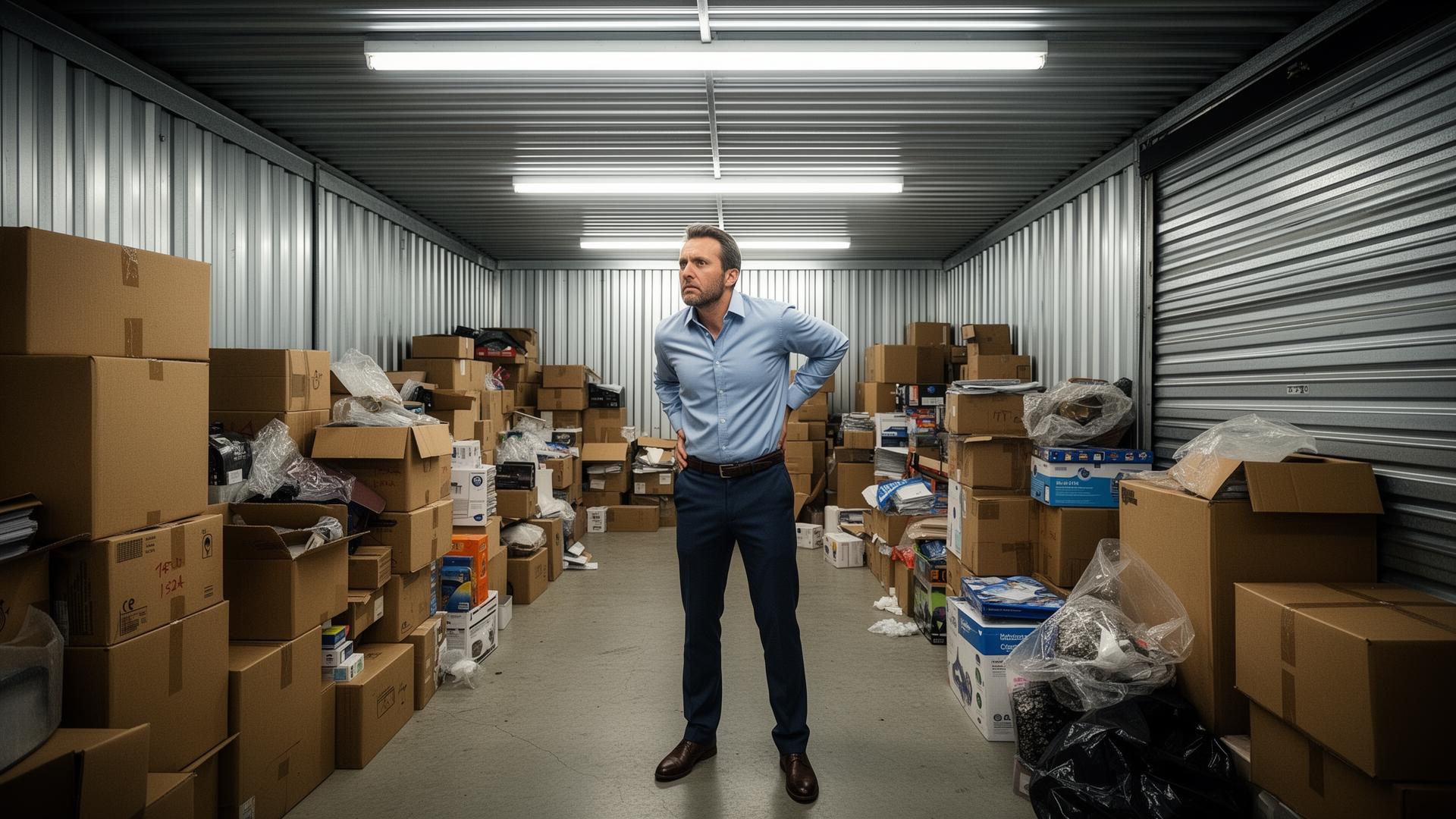
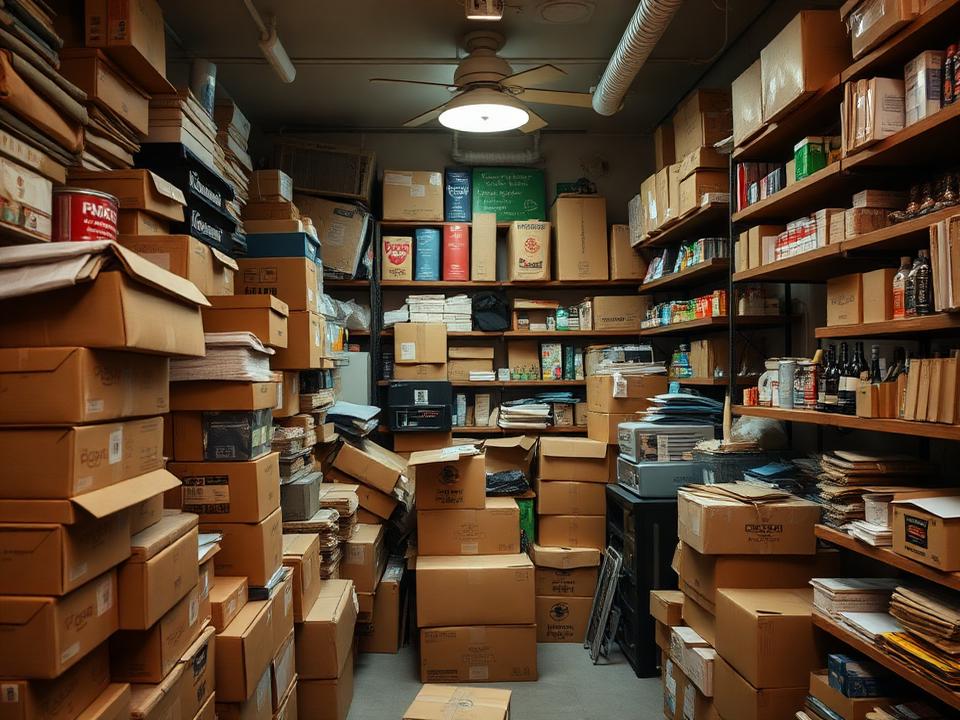
At the beginning, renting a self-storage unit for your business made perfect sense. It was cheap, conveniently accessible, and got the job done when your inventory was small. However, as you scale, that unit has morphed into a bottleneck. If you're looking for commercial storage solutions or wondering if you need a warehouse, you're facing the "Success Problem." Modern solutions like flexible pallet storage can help.
The very convenience that self-storage provided in the early days is now holding you back.
Growth brings new challenges. What used to be a simple storage solution is now causing daily headaches — from wasted employee hours to missed deliveries and overflowing office space. There comes a tipping point where that "cheap" storage unit actually becomes one of your most expensive operational liabilities.
And it's not the monthly rent that's the issue; it's the hidden labor costs, inefficiencies, and lost opportunities that add up around it. As warehousing experts note, if you use a bare-bones self-storage unit for anything beyond basic storage, the extra time and resources you spend can "add up and negate any initial savings."
The Thesis: How do you know your business has hit this tipping point? Below are five telltale signs that you've outgrown your storage unit — and a game plan for what to do next. If several of these sound familiar, it's time to rethink your approach before these hidden costs burn through more of your time and money.
Sign #1: Your Highest-Paid Staff Are Acting as Movers
The Scenario
Picture your operations manager or lead designer spending Tuesday afternoon driving out to a self-storage facility. It's 90°F in a stuffy hallway, and this highly skilled (and highly paid) team member is sweating and shuffling boxes around to find a specific item. Instead of strategizing or generating revenue, they're literally moving boxes.
The Hidden Cost Math
Let's do the math:
- • Staff member spends 4 hours/week on storage tasks
- • At $35/hour fully loaded cost = $140/week
- • Monthly labor cost = ~$560
- • Annual wasted productivity = $6,720+
Meanwhile, that 10×10 storage unit only costs ~$200/month in rent. The "savings" on cheap storage are erased many times over by labor inefficiency.
The "Aha" Moment: Your team should be focused on high-value work, not heavy lifting. If your key employees know the layout of the local Public Storage better than your last quarterly report, it's a sure sign the storage unit has outlived its usefulness. You hired smart people to grow your business – if they're spending their days driving U-Hauls or digging through boxes, your "cheap" storage fix is secretly very expensive.
Sign #2: You're Organizing Logistics Around the "FedEx Window"
The Scenario
Do you ever find yourself dropping everything at 3 PM because a delivery driver is "10 minutes away" at the storage unit? Or worse, have you missed an important shipment because nobody was there to sign for it? Many self-storage facilities don't accept deliveries on behalf of tenants. This means you must be physically present to receive packages — interrupting your workday, racing across town to meet a FedEx truck in a loading bay.
Waiting around for deliveries is dead time. Every minute spent driving to the unit or loitering for a late truck is time stolen from running your business. In today's on-demand world, you should be able to arrange inventory shipments without becoming a hostage to a 4-hour delivery window.
Expert Insight: Contrast this with a proper warehouse setup: a commercial warehouse has a staffed receiving dock where deliveries just happen in the background, without your involvement. Packages are received, signed for, and even logged without you lifting a finger. You get an alert that your shipment arrived, and you continue with your day — no wasted trips, no missed packages. Learn about our receiving services →
Sign #3: You're Paying for "Air" (The Vertical Limit)
The Scenario
Your storage unit has an 8-foot ceiling. You have four pallets' worth of inventory, but you can't safely stack pallets in that unit — it's all floor storage. So what did you do? You rented a second unit to spread things out. In effect, you're renting double the square footage because you can't utilize the cubic space above a certain height.
Self-Storage Unit
- • 8-foot ceiling height
- • Floor storage only
- • Pay for square footage
- • Waste vertical space
Commercial Warehouse
- • 20+ foot ceilings
- • Industrial pallet racks
- • Think in cubic space
- • 2-3x more capacity
The Expert Insight: "Real efficiency comes from thinking in cubic space, using every inch from floor to ceiling." By going vertical, a warehouse can store two or three times the inventory in the same floor space. If you find yourself playing storage Tetris — shuffling boxes or leasing second units — it's a strong sign you've outgrown the limitations of a standard storage unit.
Sign #4: You've Bought Inventory You Already Own
The Scenario
You need 50 branded brochures for an event. You know you have a box of them… somewhere in that storage unit. You spend 20 minutes rummaging through stacks of bins and boxes. It's hot, you're in a rush, and eventually you give up: "Maybe we ran out?" You order a new batch overnight. A week later, you stumble on the "lost" brochures buried in the unit. You basically paid for your own inventory twice.
This is inventory blindness. Relying on memory or a paper clipboard to track what's in your storage unit is a recipe for duplicate orders and forgotten stock. In a cluttered unit, items get hidden behind other items, leading you to mistakenly assume you're out.
The Fix: A "Digital Twin" of Your Inventory
Modern warehouses provide digital inventory tracking as a standard feature. Through a simple web dashboard, you can see that you have 3 boxes of brochures in Bin A3 and 200 cables on Shelf B2. No guesswork, no scavenger hunts. This kind of visibility prevents accidental re-ordering and helps catch shrinkage before it becomes a problem.
Sign #5: Your "Overflow" Has Invaded Your Office
The Scenario
Perhaps the clearest sign of all: your storage unit is maxed out and now your office is starting to look like a warehouse. The conference room is filled with overflow product boxes. The reception area has a pallet tucked in the corner. Hallways are lined with inventory. Your team is joking about the office decor being "early Costco chic."
The Optics Problem
What message does a cluttered office send to clients? A messy, box-filled workspace screams disorganization. Imagine a client weaving around stacks of merchandise to reach the meeting room. First impressions matter.
The Safety Risk
Piles of inventory and narrow pathways create tripping hazards and may violate fire codes. Fire safety experts warn that cluttered storage areas significantly increase fire risks by providing more fuel and obstructing exits.
Bottom Line: If your "storage solution" has spilled over into every corner of your office, it's a flashing red sign that the business has outgrown not just the storage unit, but any ad-hoc approach. You shouldn't have to choose between a presentable, safe workplace and having your inventory accessible.
The Pivot: Embracing Micro-Warehousing
Recognizing one or more of the signs above is actually a good thing: it means your business is growing. Congratulations on having what we call a "success problem." Now, the next step is to solve it without overstretching your budget or operations.
For businesses in San Diego, Juujbox offers a solution that sits right between a storage locker and a massive logistics center.
What is Micro-Warehousing?
Think of micro-warehousing as "Self-storage 2.0" or warehousing-as-a-service. Instead of leasing a massive 50,000 sq. ft warehouse and hiring staff, you partner with a provider that gives you commercial warehouse capabilities on a smaller, flexible scale.
You might only use 200 sq. ft of space, but that space is embedded in a fully equipped warehouse facility — with loading docks, forklifts, inventory software, staff to receive shipments, and everything else a big company's warehouse would have. It's the best of both worlds.
Self-Storage vs. Micro-Warehouse: The Comparison
| Feature | Self-Storage Unit | Micro-Warehouse (Juujbox) |
|---|---|---|
| Deliveries | You must be present to receive | Staff receives on your behalf |
| Equipment | Bring your own (or rent) | Forklifts & pallet jacks on-site |
| Pricing | Fixed monthly fee (full or empty) | Pay per pallet/item used |
| Inventory Tracking | Your memory or clipboard | Online portal & notifications |
| Vertical Space | 8-foot ceilings max | Industrial racks (20+ feet) |
| Commitment | Month-to-month (unit-based) | Month-to-month (usage-based) |
The Flexibility Factor
Traditional warehouses often require long-term leases or minimum space commitments. A micro-warehousing solution offers month-to-month terms without high minimums. There are no massive onboarding fees or complex software integrations — you could literally start with one pallet's worth of products. This model is designed for growing businesses that are "too big for a storage unit, but too small for a full 3PL."
Real-World Example: Juujbox Pricing
Secure, ambient-cooled warehouse storage
Professional delivery anywhere in San Diego
When you factor in $560+/month of saved labor time, zero travel hassle, and far better inventory control, the decision becomes a no-brainer. Juujbox becomes your off-site shipping & receiving department — without having to hire one.
Conclusion: Stop Paying to Move Boxes
Growing pains are real — and they're actually a good sign that your business is succeeding. But your storage solution shouldn't add to the pain. If you nodded along to any of the five signs above, it's likely past time to graduate from the storage unit phase.
The cost of clinging to an outgrown system isn't measured just in rent — it's in the wasted hours, the missed opportunities, the duplicate orders, and the frazzled nerves of you and your team.
By embracing a micro-warehousing partner, you can offload the grunt work and inefficiencies while only paying for what you need. Your highest-paid staff will get back to doing what you actually pay them for. Your deliveries will show up without hijacking your schedule. Your inventory will be visible and organized. And your office can return to being a showcase for clients, not a makeshift stockroom.
Ready to Graduate From Your Storage Unit?
Juujbox offers micro-warehousing in San Diego — acting as your off-site storage and shipping department. We receive, catalog, and store your inventory, and bring you what you need on-demand.