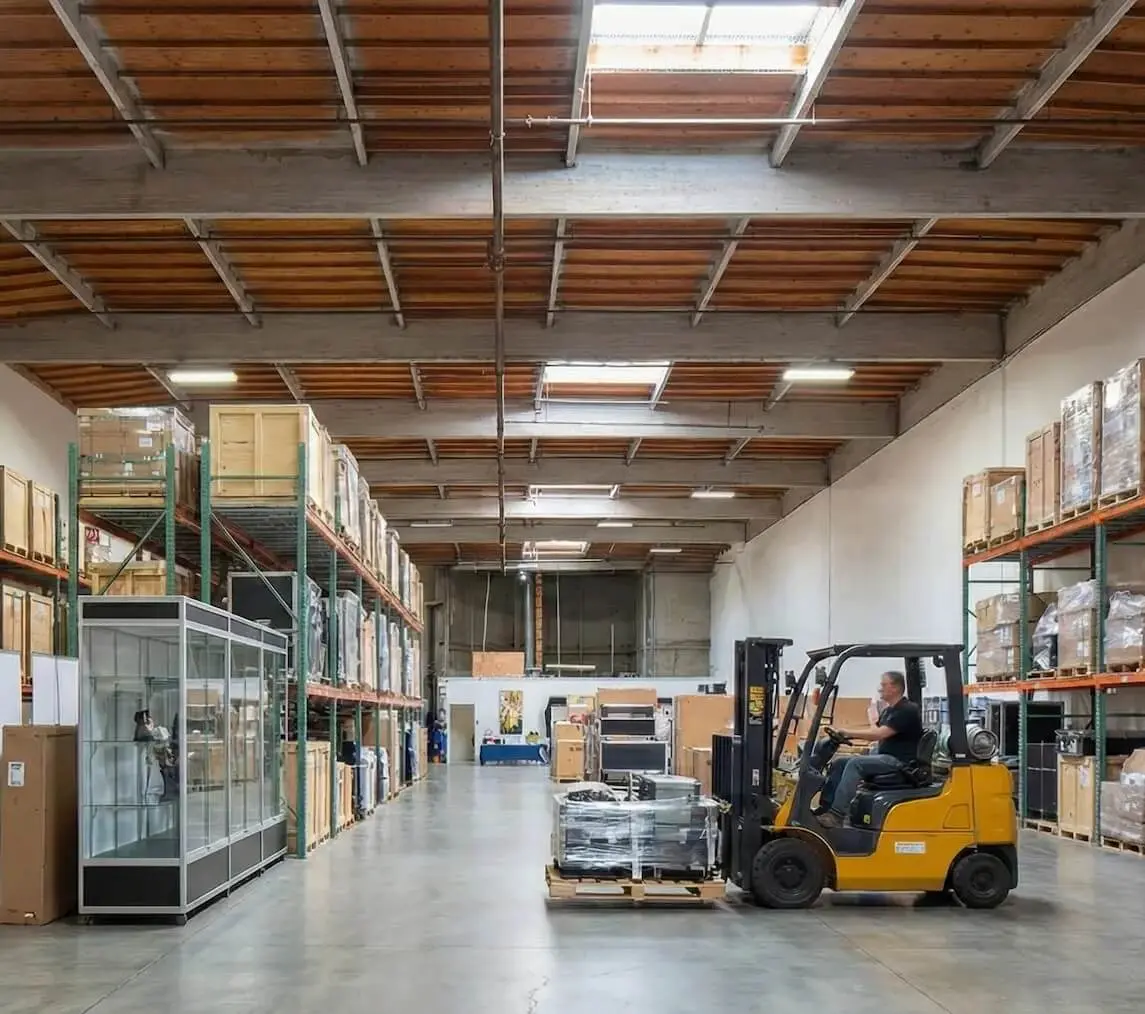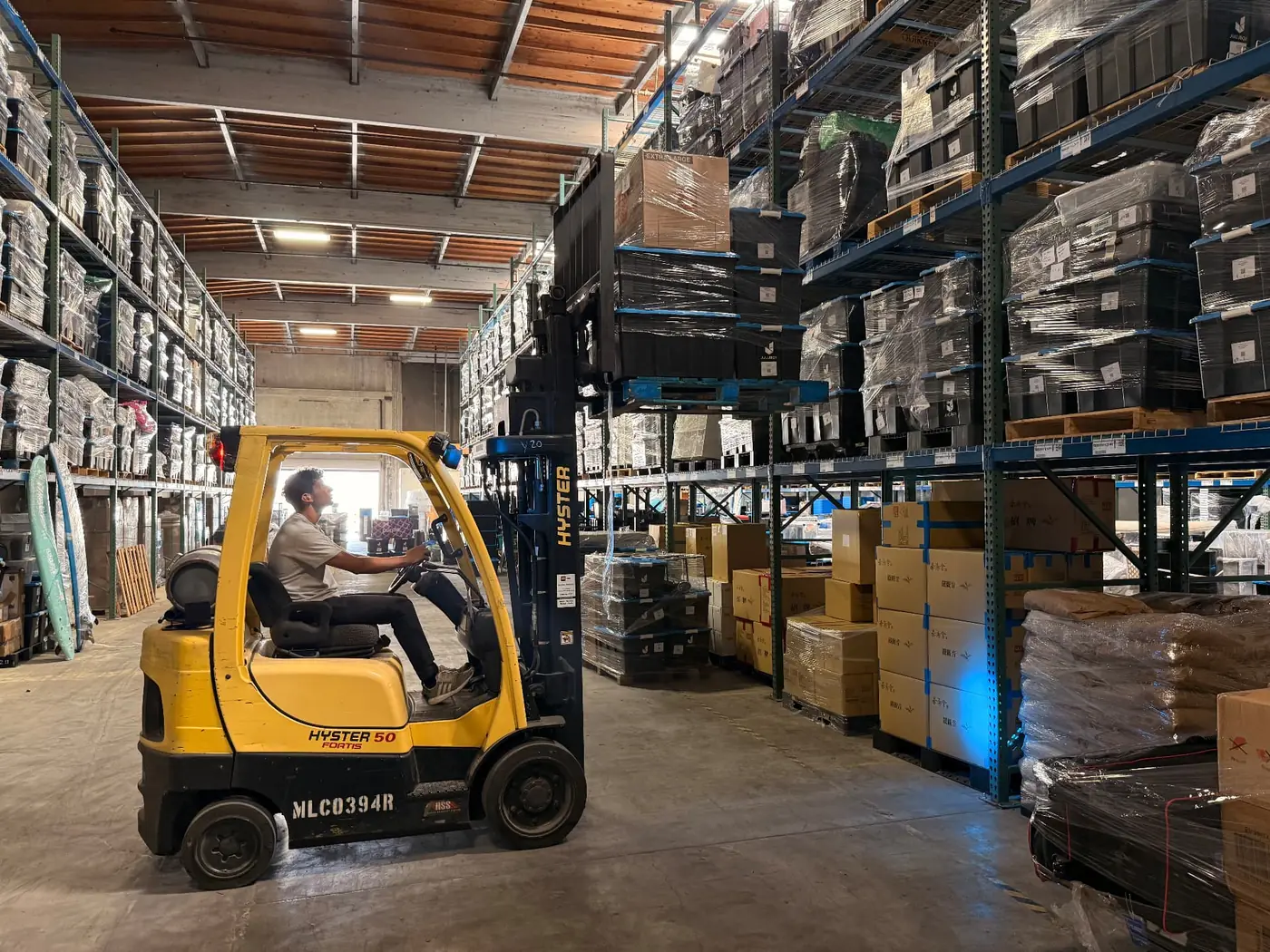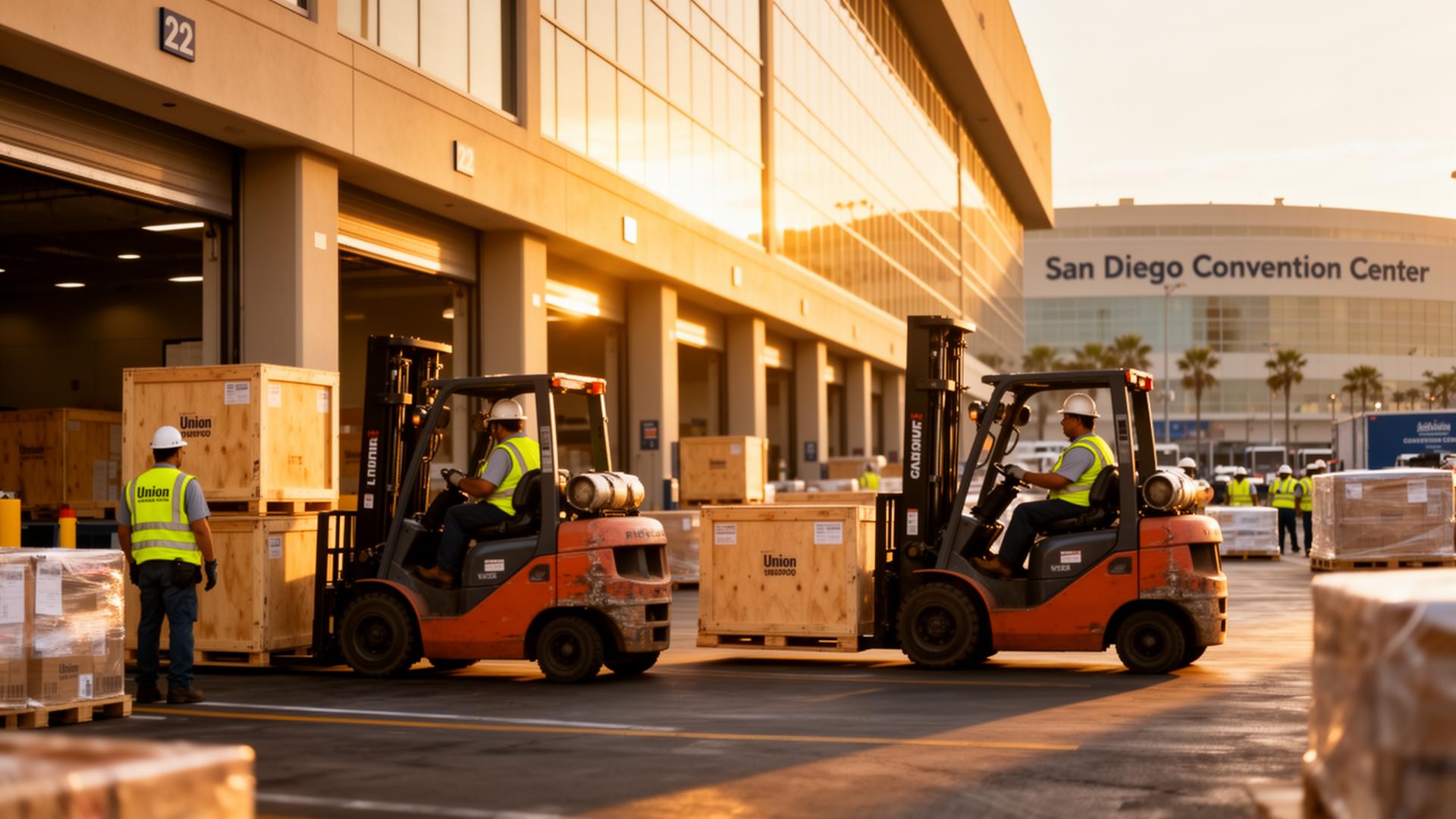
Three rulebooks. One loading dock. Zero room for guessing.
Exhibiting at the San Diego Convention Center (SDCC) means juggling three rulebooks: the SDCC Venue Regulations, your show's Exhibitor Service Manual, and the Official Contractor's policies (usually Freeman or GES).
The short version: nearly all booth move-in and move-out work is union-controlled. Unions and the official contractor handle freight, setup, dismantle, cleaning, and electrical. Exhibitors can hand-carry small items (one person, one trip, no dollies) and do light tasks. Break the rules and you'll pay in delays, drayage fees, and stress.
This guide explains each rule set in plain English, lists what you can and can't do yourself, flags the common pitfalls, and gives you a checklist plus timeline to keep on track. Wherever it makes sense, we'll show where Juujbox steps in — pre-show staging, warehousing, and post-show reset — so you can focus on the show, not the loading dock.
The Three Rulebooks You Must Follow
Every exhibitor at SDCC is working under three overlapping policies. Know which one governs each task before you order, ship, or hire.
Venue Rules
SDCC's official Venue Regulations — union jurisdictions, exclusive in-house services, freight policy.
Show Rules
The show's Exhibitor Service Manual — show-specific deadlines, EAC notification, hand-carry rules.
Contractor Policies
Freeman or GES — drayage rates, labor rules, exhibitor kit, material handling jurisdiction.
Venue Rules (SDCC Regulations)
The San Diego Convention Center's official Venue Regulations cover general policies. The four points that matter most:
- Union labor jurisdictions. SDCC has agreements with local unions (Painters/Decorators, IATSE, IBEW, Teamsters) covering move-in, installation, and dismantling of trade show exhibits. In practice, almost all physical booth work is union-controlled.
- Freight deliveries. SDCC will not accept exhibitor freight directly. All materials must go through the show's official contractor (Freeman or GES) on contracted move-in days. Deliveries must arrive on the contracted date — not early — and be consigned to the event name, hall, and contact.
- Exclusive services. Booth cleaning is in-house only — SDCC is the exclusive cleaning provider. Hard wiring and electrical work above 120V must be done by SDCC electricians or approved contractors. AV, internet, and catering also have exclusive in-house providers.
- Plan to order through official channels. Cleaning, power, AV, internet, and food all flow through SDCC or its approved vendors — not through your team or an outside contractor.
Show Rules (Exhibitor Service Manual)
Each show — Comic-Con, World of Coffee, NBAA, AACR — publishes its own Exhibitor Manual. These reinforce the venue rules and add show-specific details:
- Hand-carry boundaries. Exhibitors may hand-carry their own materials only via designated front-door areas. Dollies, hand trucks, and any wheeled equipment are not allowed. Anything that needs wheels must go through the loading dock and be handled by Freeman or GES.
- Labor jurisdiction. All installation and dismantling labor is union jurisdiction, supplied by the General Service Contractor. You can set up your own booth only if you are a full-time employee, 18+, and the work is minor. Any display company or EAC you hire must be unionized for rigging, carpet, and booth structure.
- EAC paperwork. Exhibitors must file a Notice of Intent and provide a Certificate of Insurance for any Exhibitor-Appointed Contractor. Deadlines are typically several weeks before move-in.
Official Contractor Policies (Freeman / GES)
Freeman or GES — the General Service Contractor (GSC) for your show — publishes the Exhibitor Kit with order forms and labor rates. Their policies sit on top of the venue and show rules:
- Material handling (drayage) is exclusive. Everything you ship to the advance warehouse or direct to the show is unloaded, weighed, and delivered by the GSC. They bill you per weight (typically per 100 lbs, with minimums).
- Hand-carry is narrow. Per GES: an exhibitor may hand-carry material only if they don't use material handling equipment, and they may not be permitted access to the loading dock or freight door areas. Translation: no forklifts, carts, or dollies. Through the front lobby only.
- Union labor required. The Decorators Union claims setup and dismantle (unless one person can complete it in under 30 minutes with no tools). Teamsters cover all dock and material handling. Electrical hookups above 120V require IBEW electricians.
What "Union Required" Actually Means
The mental model: if you need more than a suitcase to move it, or it involves setup, power, or rigging, it's union territory.
✓What You CAN Do Yourself
- Hand-carry small items through the main entrance — one person, one trip, no equipment.
- Unpack and place merchandise once crates are delivered to your booth.
- Plug into 120V outlets — laptops, phones, lights, screens.
- Build very simple booths if one person can do it in under 30 minutes without tools.
- Walk site tours, plan layout, and review your space anytime.
✕What You CAN'T Do Yourself
- Roll in carts, dollies, or pallet jacks — even light ones. All wheels = dock = union.
- Unload your own freight at the loading dock. Teamsters only.
- Hard-wire power or run cables to breakers. IBEW electricians.
- Hang signs or rig overhead truss. Certified union riggers only.
- Bring your own cleaning crew. SDCC has exclusive in-house cleaning.
When You Have to Call the Official Contractor
Freeman or GES owns these tasks completely. Order them through the Exhibitor Kit, ideally before the discount deadline:
- Freight & drayage. Shipping and receiving everything from warehouse to show floor and back is the GSC's job. Even a box of brochures dropped early will be intercepted.
- Labor beyond one person. Any booth build or dismantle that needs tools, multiple people, or more than ~30 minutes goes through union labor.
- Wheeled equipment of any kind. Dollies, forklifts, pallet jacks, carts — operated by union labor only.
- Empty crate handling. Returning empties to storage and pulling them back for outbound freight goes through the GSC.
- Electrical installation. Outlets, custom wiring, hard-wired equipment — IBEW electricians via Freeman/GES.
Exclusive Services at SDCC
You must order these through SDCC or its official vendors — there is no opt-out:
| Service | Who Provides It |
|---|---|
| Booth cleaning & waste removal | SDCC in-house staff |
| Electric & rigging | SDCC / IBEW union crews |
| Audio / visual | SDCC in-house AV contractor |
| Food & beverage | SDCC approved caterers (no outside food) |
| Internet / telephone | SDCC's exclusive provider |
| Security | SDCC authorized providers |
Using Your Own Contractors (EAC Rules)
If you hire an Exhibitor-Appointed Contractor — your own booth builder or tech team — there are strict rules you have to follow:
- Notify in advance. File a Notice of Intent to use an EAC, usually weeks before move-in. Miss the deadline and your crew won't get floor access.
- Insurance certificates. Your EAC must carry General Liability (typically $1M+) and Workers' Comp. The show contractor and exhibitor are usually named as additional insured. No proper COI = no floor access.
- Scope limitations. EACs can only perform non-exclusive tasks — modular booth installs, carpentry, graphics. They cannot do material handling. If union jurisdiction applies, your EAC may only supervise while union does the heavy work.
- Badge policy. EAC workers often need special wristbands — they typically can't work the floor with regular exhibitor badges.
- Liability. If your EAC breaks the rules, you are on the hook.
Common Mistakes & Cost Traps
Move-In / Move-Out Planning Checklist
Work this checklist backward from your move-in date. Your progress saves automatically.
Sample Move-In / Move-Out Timeline
A generic SDCC trade-show timeline. Actual dates depend on your event, but the phase sequence is always the same.
From planning runway to post-show wrap — one rhythm.
Sample Emails You Can Steal
Three short templates to keep your prep moving. Click to expand and copy.
Pre-show shipping prep+
EAC inquiry+
Post-show debrief+
How Juujbox Helps
Juujbox is built for the pre- and post-show coordination that sits outside union jurisdiction. We do everything up to the point Freeman or GES takes over:
Pre-show staging
Send your booth components to us instead of SDCC. We'll receive, palletize, label correctly, and ship on the right day to the advance warehouse.
Inventory & prep
We catalog every item, flag missing or damaged pieces, and pre-build kits so installation is smooth on move-in day.
Post-show reset
After teardown, have Freeman/GES ship everything back to us. We unpack, photograph, update your inventory, and store until next time.
Local same-day support
Need a last-minute spare cable or replacement? We can hand-carry small items short distances in San Diego when time is critical.
In short: Juujbox handles all exhibitor logistics outside the show floor. You never have to call the union or wrestle with SDCC bureaucracy directly. We make sure your freight arrives at SDCC on the right day, labeled the right way — and we fix the chaos after the show. Think of us as your backstage partner between shows.
Final Notes
Rules can vary. Always double-check the current SDCC Venue Regulations and your show's manual. Union and EAC rules shift year to year. When in doubt, contact your Event Manager or the official GSC ahead of time.
Document everything. Keep copies of shipping receipts, insurance certificates, and email threads. Photograph your booth before and after for your records.
Plan for extra costs. Union labor, drayage, and overtime add up fast. Build a budget cushion. Juujbox helps reduce surprises, but labor rates are set by contract.
Understand the layers, plan accordingly, and you'll avoid the delays, fines, and headaches that catch most first-timers. The official contractor and unions aren't out to get you — they're following pre-set contracts. Your success comes from preparation and knowing where Juujbox steps in.
Ready to plan your SDCC logistics?
We'll receive your booth, prep it for show floor, and deliver it to the convention center on the right day — so you can focus on the show, not the loading dock.