Advance warehouse means shipping your freight to the show contractor’s receiving facility weeks before the show; it’s guaranteed on the floor at move-in but costs more per hundredweight. Direct to show means your truck arrives at the convention center inside a narrow assigned window; the drayage rate is lower but a missed window can mean off-target fees or freight that never makes it to your booth. The general rule of thumb: pay the advance-warehouse premium when you can’t control the truck, and go direct only when you have a reliable local carrier and a forgiving install schedule.
What is an advance warehouse?
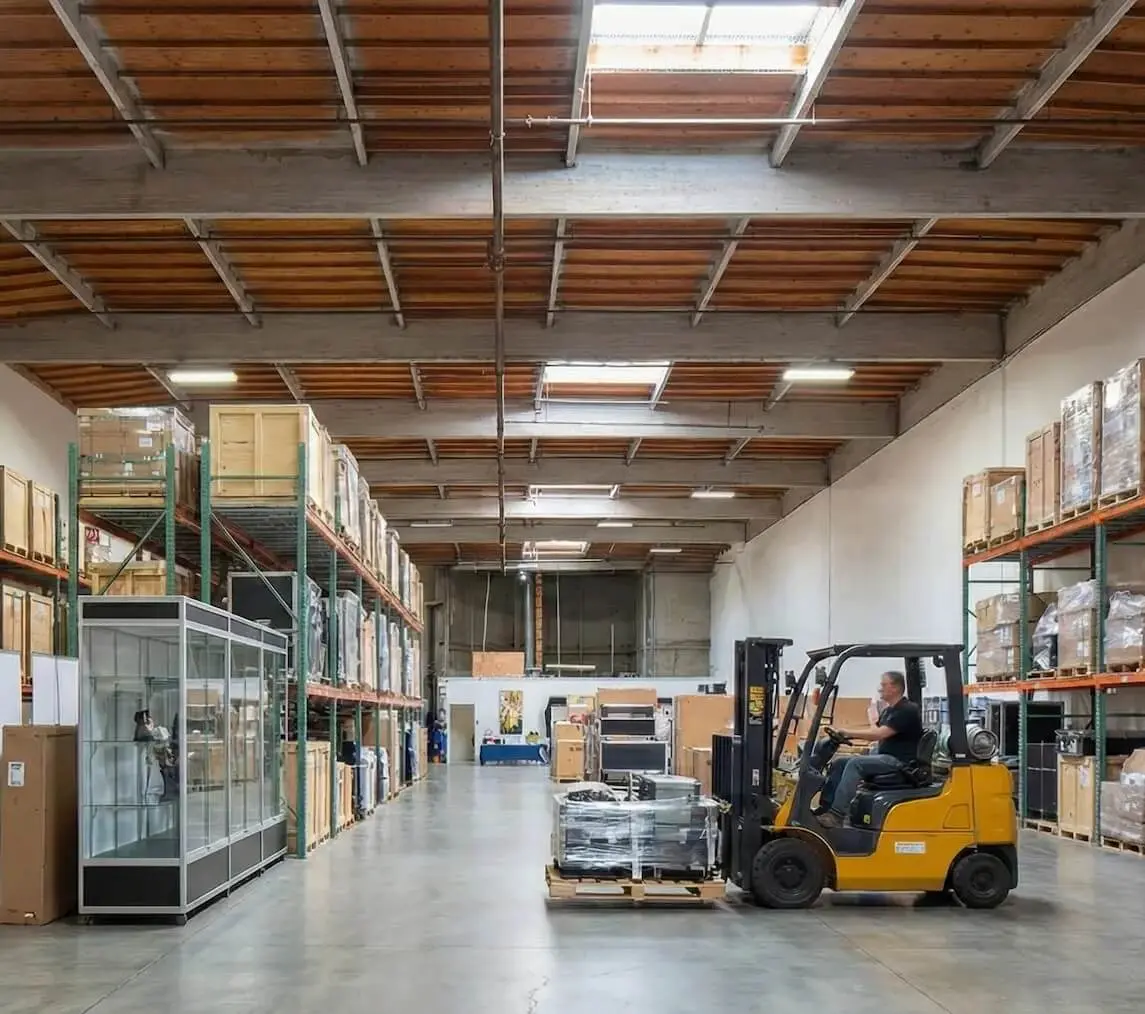
An advance warehouse is a receiving facility operated by the general services contractor (GSC) for a trade show — companies like GES, Freeman, and Shepard run these for the events they service. It opens roughly 30 days before move-in and accepts crates, pallets, and cartons from exhibitors ahead of the show. Your freight is signed for, weighed, stored, and then trucked to the convention center in time for your assigned move-in target.
You pay for that service through drayage (sometimes called material handling), which is billed per hundredweight (cwt) with a minimum charge per shipment. The advance-warehouse rate covers receiving at the warehouse, storage until move-in, delivery to the show floor, empty-crate storage during the show, and return of empties to your booth at move-out. Every show publishes its own rates in the exhibitor kit; they vary considerably by city, union rules, and contractor.
The upside is certainty. Once your freight is checked in at the advance warehouse, it is the contractor’s responsibility to have it in your booth space when your move-in window opens. You don’t sit at a marshalling yard, you don’t chase a driver, and you don’t discover at 8 a.m. on move-in day that your booth is somewhere on the 5.
What is direct-to-show shipping?
Direct-to-show (sometimes “show-site” shipping) means your truck arrives at the convention center during a specific assigned window — often a two-hour block on a specific day. Freight is unloaded straight to the floor, so you skip the advance-warehouse leg entirely.
Before the truck touches the dock it usually stages at a marshalling yard a few miles from the venue. Drivers check in, get a target time, and wait to be called. On a busy show that wait can run several hours, and detention charges from the carrier start accruing once the free time runs out.
The per-cwt drayage rate for direct-to-show is generally lower than advance warehouse because the contractor isn’t storing your freight for weeks. The trade-off is timing risk. If your truck is late, arrives outside its window, or doesn’t make marshalling in time, the contractor can charge off-target fees, redirect the shipment through the advance warehouse at a higher rate (“forced freight”), or refuse the truck until a slot opens.
Cost comparison
Actual drayage rates are set by the show contractor and printed in each show’s exhibitor kit; the numbers below are typical industry ranges to illustrate structure, not quotes for a specific show.
| Cost line | Advance warehouse (typical) | Direct to show (typical) |
|---|---|---|
| Base drayage rate | Higher per cwt | Lower per cwt |
| Minimum charge per shipment | Usually 200 lbs | Usually 200 lbs |
| Receiving window | ~30 days out to ~2 business days before | Assigned target window only |
| Off-target / late fees | Rare | Common if window is missed |
| Forced-freight surcharge | Not applicable | Applied if freight is rerouted to advance warehouse |
| Marshalling yard detention | Not applicable | Charged after free time |
| Overtime handling | Charged if move-in falls on OT hours | Charged if move-in falls on OT hours |
The right comparison isn’t just the headline rate. Direct-to-show looks cheaper on paper, but a single missed window can push the effective cost above advance warehouse once off-target fees, detention, and forced freight land on the invoice. Advance warehouse trades a higher predictable rate for lower operational risk.
The third option: a local advance warehouse you control
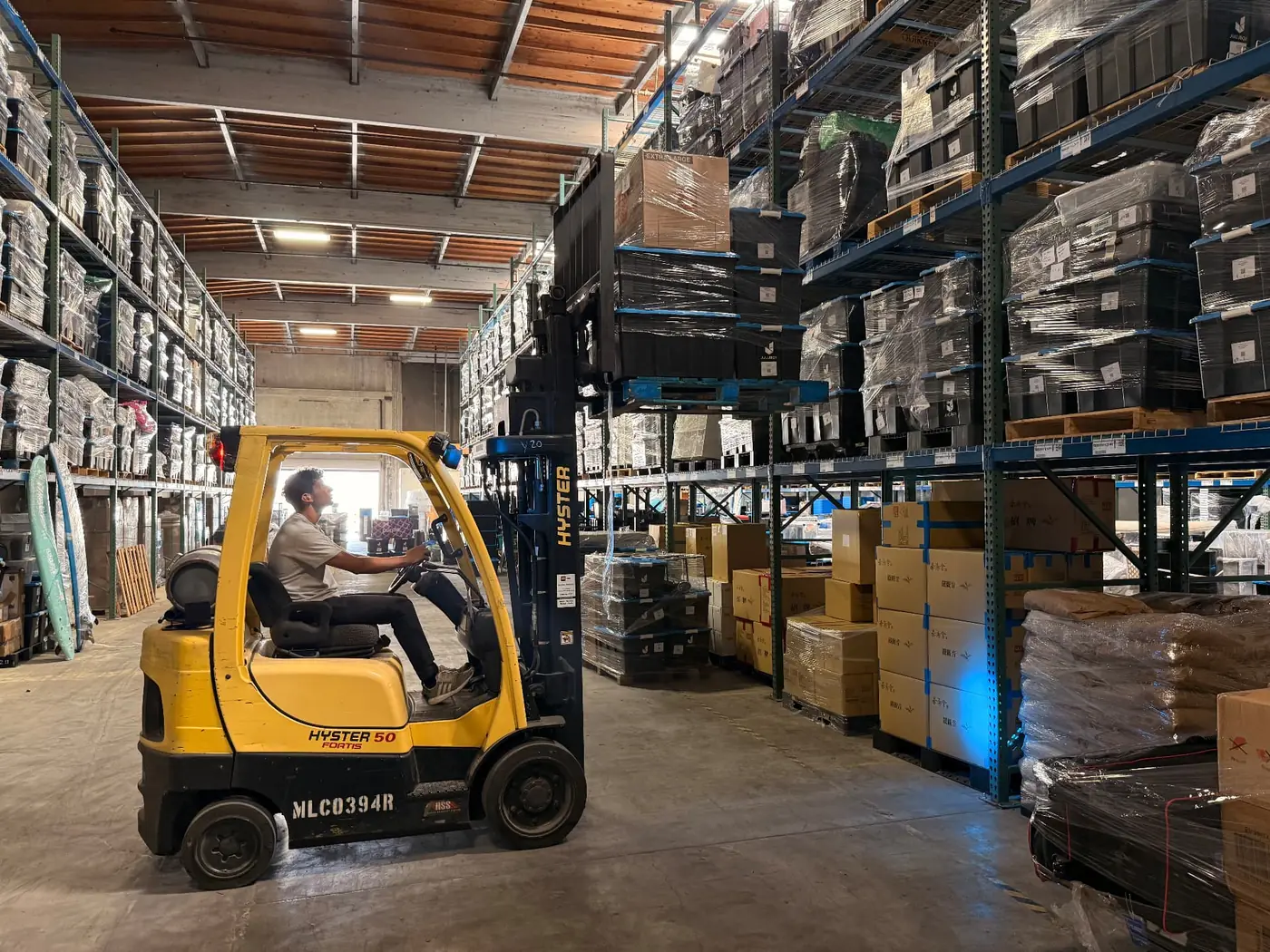
For shows in San Diego there is a third path that most exhibitor kits don’t highlight: ship to an independent local warehouse and control the last mile yourself. Your freight arrives at a nearby facility — not the show contractor’s — and stays there until you’re ready to deliver it to the venue or marshalling yard on your assigned target time.
The trade-offs vs. the show contractor’s advance warehouse:
- Ship whenever you want. The contractor’s 30-day window doesn’t apply. You can ship weeks or months early, or leave your booth in San Diego year-round between recurring shows.
- Flat monthly storage instead of per-cwt receiving. A local warehouse charges storage by pallet or space, which for repeat exhibitors typically comes out lower than the contractor’s per-hundredweight advance receiving line.
- Access to your gear. Need to swap in new giveaways or reprint a banner? At a contractor advance warehouse, your crates are sealed until move-in. At an independent warehouse, you can open a pallet.
- You still pay show-floor drayage. The contractor charges drayage from the dock into your booth regardless of who trucked it there. This is what your rate covers once your delivery hits the venue.
- It also solves the return trip. The bigger scramble is usually at move-out — freight sitting on the floor waiting for a carrier that shows up 12 hours later. A local warehouse can pick up from the venue at move-out and hold your materials until you decide whether to ship them home or store them for the next show.
This is what Juujbox offers in San Diego. If you’re weighing options for a show at the convention center, our advance warehouse and receiving service and convention center storage pages walk through how it works. It won’t make sense for every exhibitor — a 200-lb single-pallet shipment for a one-time show is often simplest through the show contractor — but for repeat exhibitors, multi-pallet booths, or teams that need to touch their freight before move-in, the local option almost always comes out ahead on both cost and control.
How to choose
Two questions decide it for most exhibitors:
- Can you guarantee the truck? If a reliable local carrier is delivering and your target time is generous, direct-to-show works. If you’re shipping long-haul with a carrier you don’t control, the advance warehouse (contractor or independent) is worth the premium.
- Do you exhibit at this venue more than once? If yes, a local independent warehouse almost always beats paying the contractor’s advance-warehouse rate every year, because your booth never has to leave the city.
Frequently asked questions
Is the advance warehouse worth the extra cost?
For most exhibitors, yes. The per-cwt rate is higher than direct-to-show, but shipments are received during a wide window (typically up to 30 days ahead), inspected, and guaranteed on the show floor at your move-in target. The lower risk of missed windows, off-target fees, and forced freight surcharges usually outweighs the premium — especially for exhibitors flying in from out of town.
What happens if my freight misses the direct-to-show window?
If your truck arrives outside its assigned direct-to-show window, the show contractor can charge off-target fees, redirect the freight to the advance warehouse at a premium (“forced freight”), or hold the truck at the marshalling yard until a slot opens. In the worst case, your booth materials arrive after your setup window closes.
Can I use my own warehouse instead of the show contractor’s advance warehouse?
Yes. You can ship to any third-party warehouse in the host city, store as long as you need, and then deliver to the venue or marshalling yard on your assigned target time. You still pay drayage from the dock into your booth, but you avoid the contractor’s per-cwt advance-warehouse receiving fee and gain flexibility on how early you ship and how long you store.
How early can I ship to an advance warehouse?
Show contractor advance warehouses typically open about 30 days before move-in and close a few business days before the show. A local third-party warehouse has no such window — you can ship weeks or months ahead and store between shows if you exhibit in the same city each year.
Next steps
For shows at the San Diego Convention Center, see our advance warehouse and receiving service, convention center storage, or year-round booth storage for exhibitors who return to San Diego every year. For shows outside San Diego, see our nationwide trade show booth shipping service.