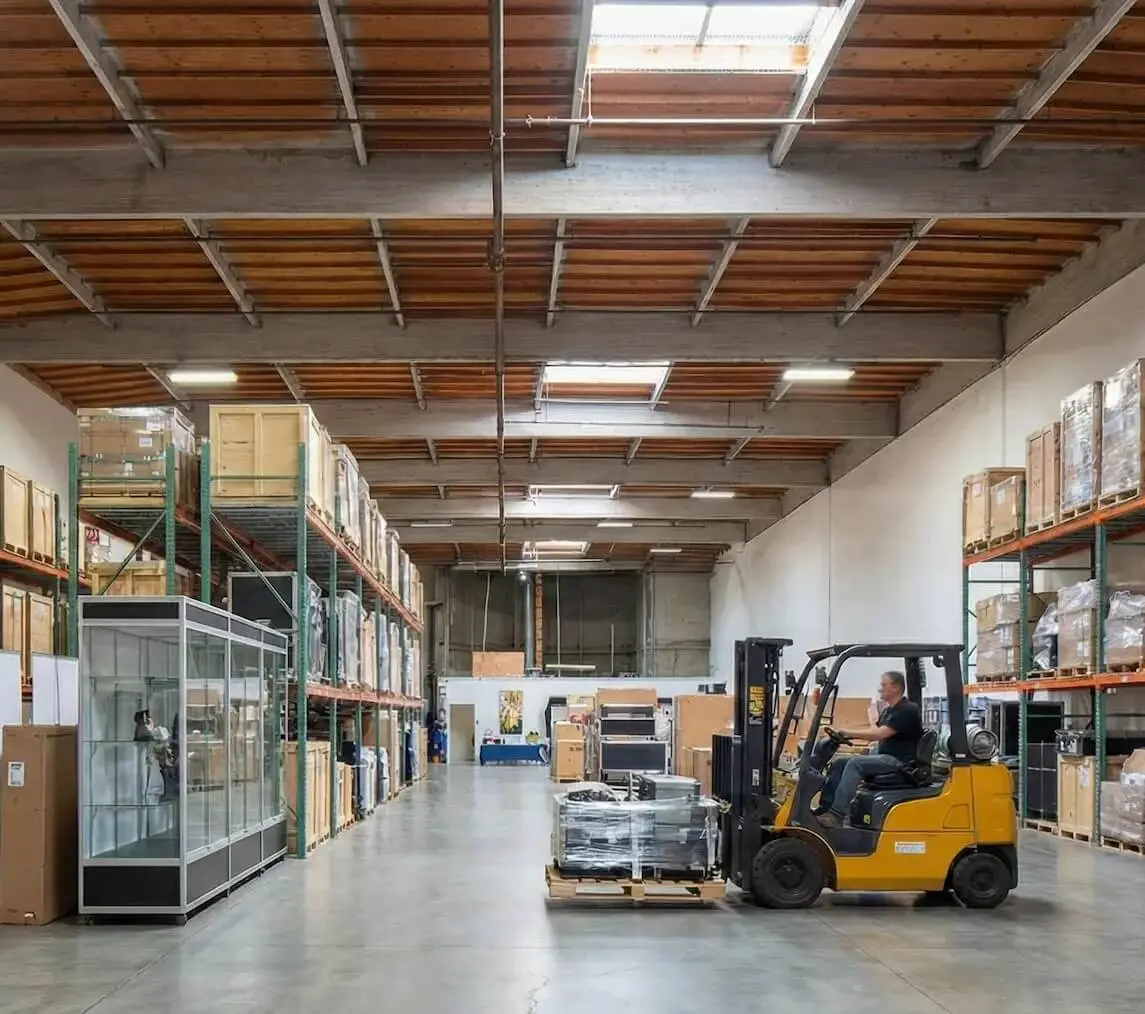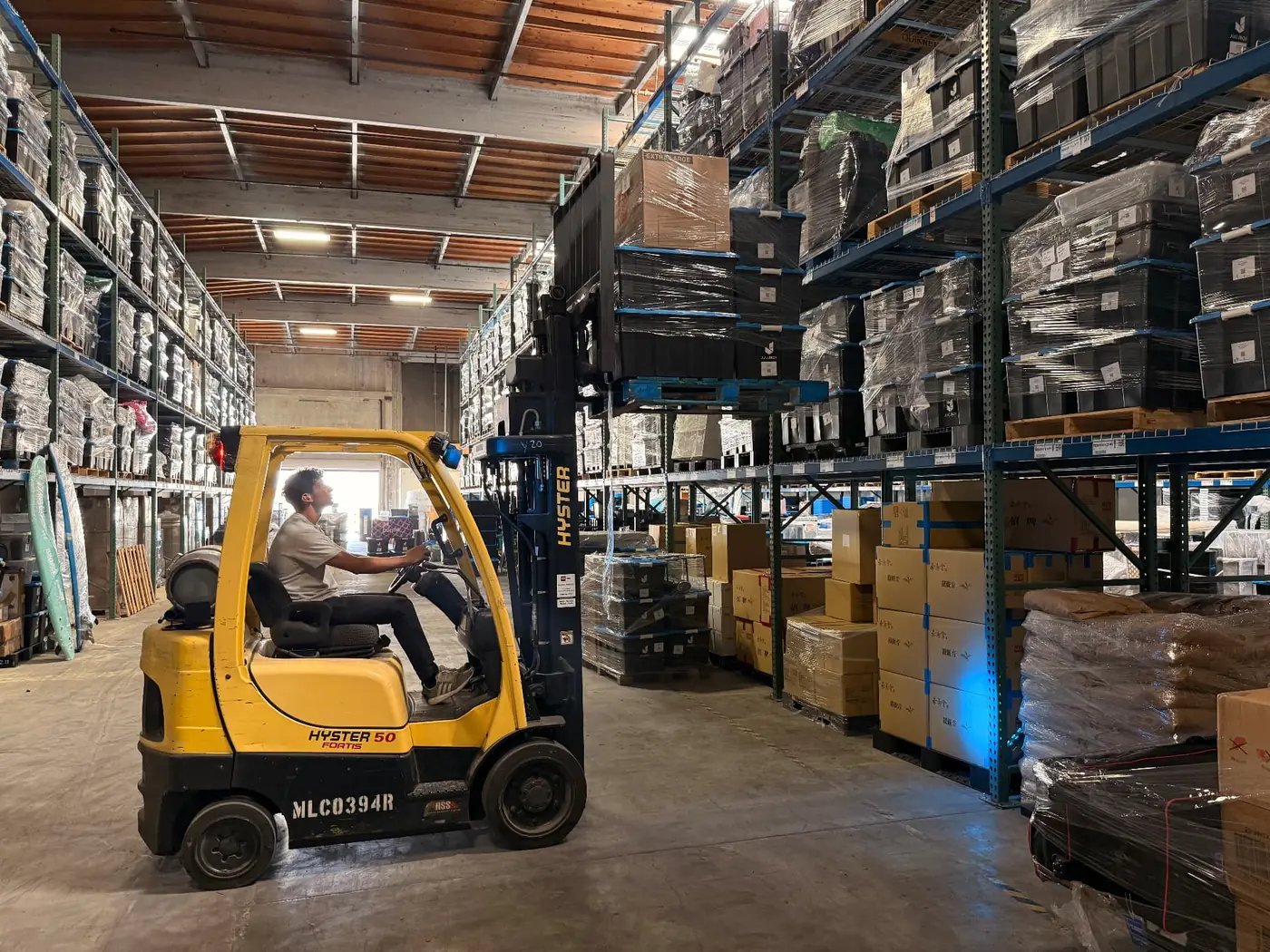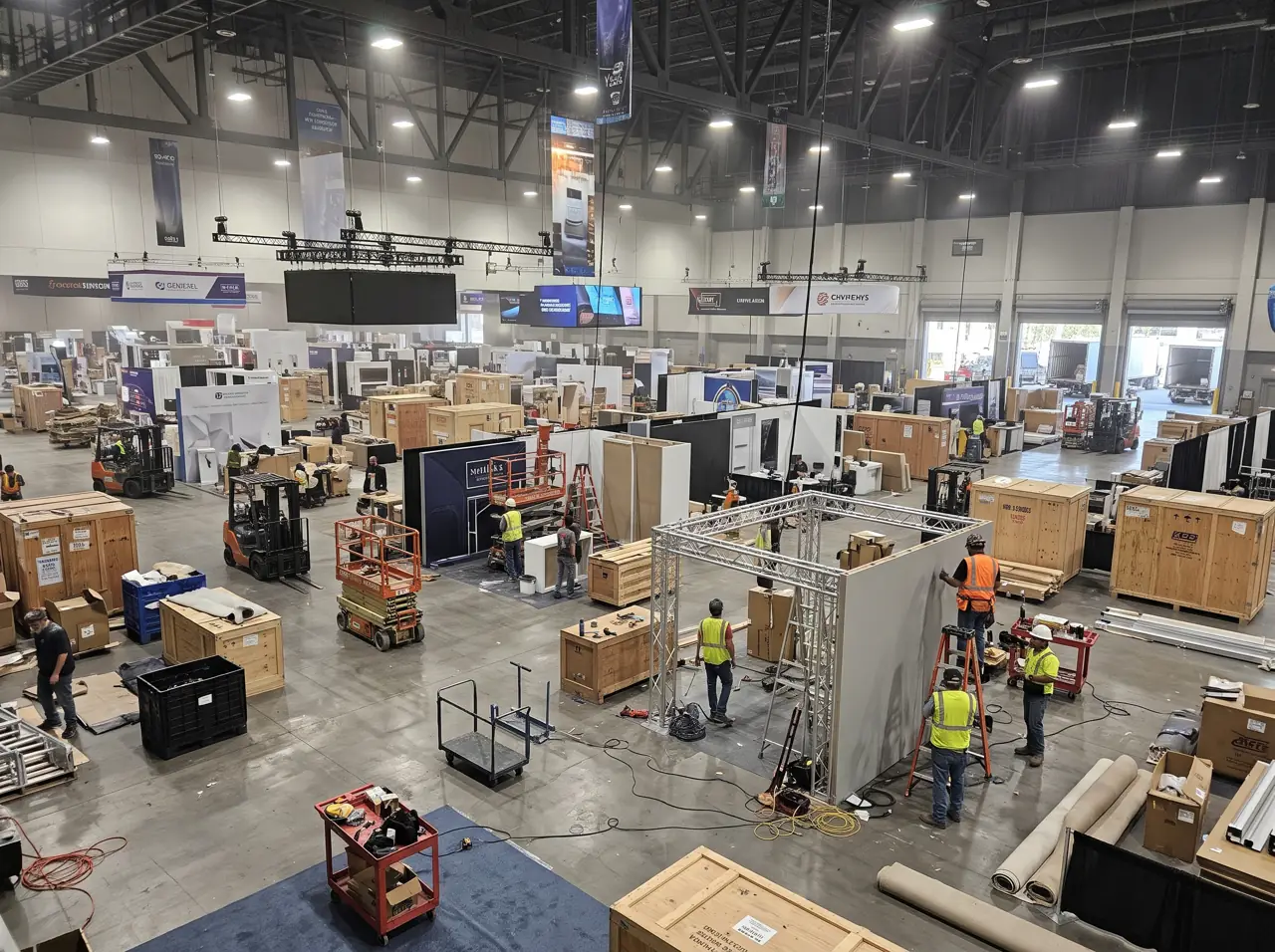
This is a step-by-step guide to exhibiting at a Las Vegas trade show: shipping your booth, the vendors you're required to use, union labor, what it all costs, and getting everything home afterward. It works for any show in the city, from CES at the Convention Center to a hotel ballroom.
I wrote it after a customer called me with hesitation and regret in her voice. Only a few minutes earlier she had been excited about her first show and getting her brand out in the wild. She hadn't realized that booking the space is only the beginning. The entire process after it is fragmented, confusing and costly. It's doubly costly when you make mistakes.
I run a warehouse that stores and ships trade show booths, and before every Vegas show I get the same three questions. Can I ship it ahead? Do I have to be there when it arrives? Who am I required to hire, and where can I shop around?
Can I ship it ahead?
Yes
Do I have to be there when it arrives?
Usually not
Am I stuck with their vendors?
Only the exclusive ones
You have more choice than the exhibitor manual makes it look. Three details decide almost everything else: your show, your building and your booth number. Find those first.
How to use this guide. There are ten steps, in the order you'll hit them. Each one opens with a short answer, then tells you what to look for in your own show's manual and what to ask. Where a real number helps, I use a published one and say which show it came from.
Rates and dates checked November 20, 2026.
How a Las Vegas show works, in one minute
Four groups are involved. Most first-show confusion comes from not knowing which one to call.
| Who | What they do | Call them about |
|---|---|---|
| The show organizer | Runs the event and sold you your booth space | Your space, badges and show rules |
| The show contractor | The company the organizer hires to run the show floor: unloading trucks, power, carpet and labor. Freeman and GES are two you'll see often in Las Vegas. | Deliveries, orders and anything on the show floor |
| The building | The convention center or hotel. It often sells internet and food itself. | Internet and catering |
| Your trucking company | Brings your booth to Las Vegas and takes it home. You choose it. | Pickup and delivery times |
Everything they expect from you is written in one document, the exhibitor manual (some shows call it the exhibitor kit). The organizer provides it after you book. If you haven't seen it, ask them for it. This guide tells you which parts matter.
The order things happen: you ship your booth, the hall opens for a few setup days (manuals call this move-in), the show runs, and then everything is packed and trucked out (move-out).
The questions we get asked the most
0 of 10 steps done
Your progress is saved in this browser, so you can come back before your show.
Seven dates to find in your exhibitor manual
Every Vegas show publishes these. Write yours down before you do anything else.
- 1First day you can ship to the show's warehouseArrive earlier and it may be turned away
- 2Last day to reach the warehouse without a late feeAfter this the same shipment costs more
- 3Deadline for early prices on power, internet and rentalsPrices go up after this date
- 4Deadline to register an outside setup companyOnly matters if someone other than the show's crew sets up your booth
- 5Your booth's assigned delivery day and timeIf you ship straight to the hall, the truck has to arrive then
- 6When your empty cases are returned after the showYou can't pack up until they are back
- 7Deadline for your trucking company to pick upMiss it and the show picks a trucking company for you
Step 1: I just booked my first exhibit in Vegas. What do I do next?
Short answer
Put the key details on one page: your show, building, booth number and deadlines. Do it before you book a truck, order power or pick the team hotel.
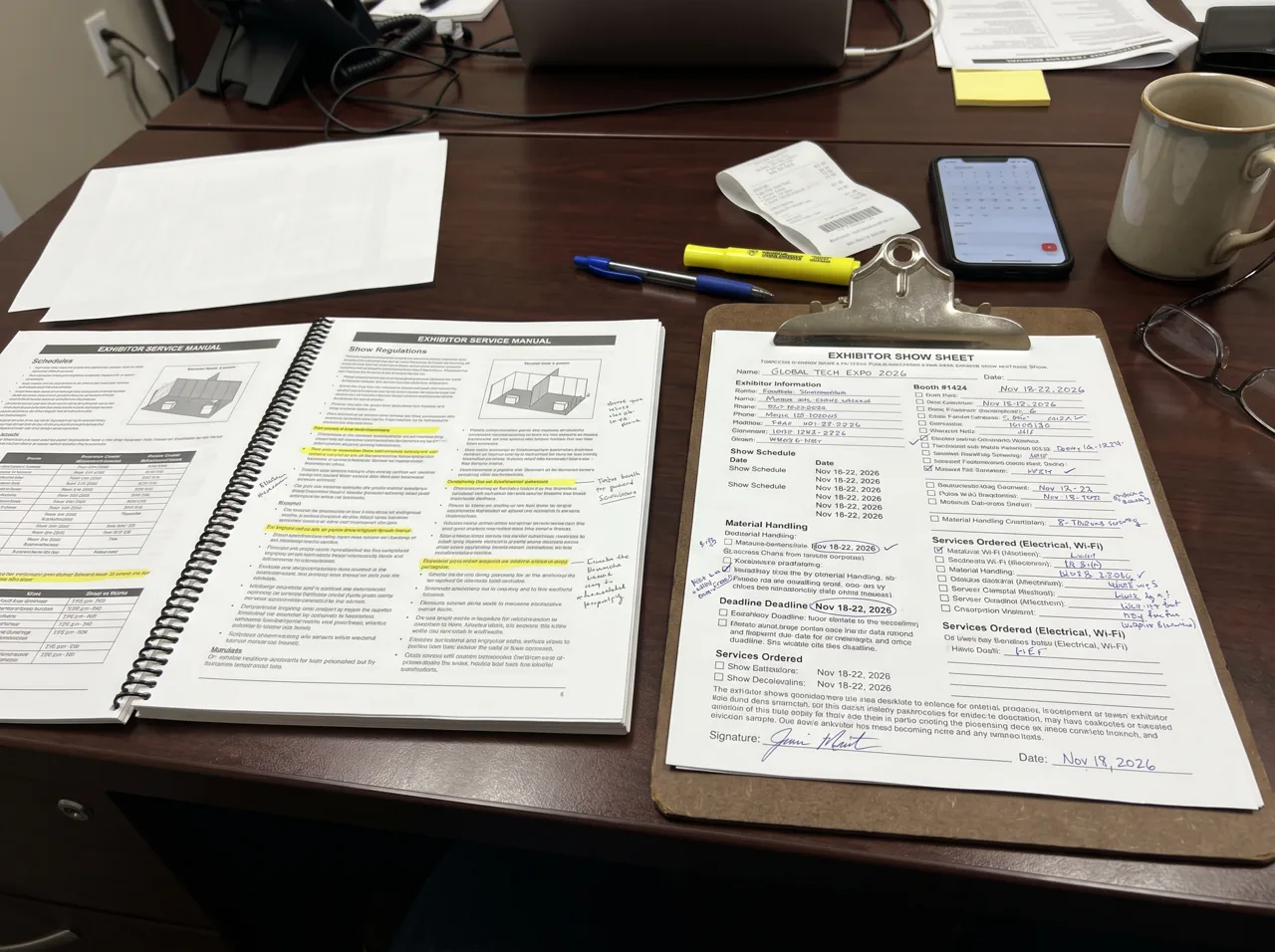
A wrong hall, a wrong booth number or last year's manual is how a shipment ends up at the wrong dock. One page that everyone works from prevents that.
Put this on the page
- Show and year, building, hall, booth number
- Company name exactly as it appears on your contract
- The seven dates from the list above
- Who on your team will be in charge at the show
- The show contractor's help desk phone number
Then read three parts of the exhibitor manual: what your booth space includes and what it doesn't (carpet, furniture and power can be extra), the order forms for anything you need to add, and the map showing where your booth is and where trucks deliver.
Every order form has two deadlines: an early one with a lower price and a final one. Write both down. Ordering between them is paying more for the same thing.
Watch for this: one show can be spread across several buildings, each with its own schedule and rules. CES is the clearest example. It publishes a separate manual for each building and a separate setup schedule for each hall. Make sure the manual and map you're reading are for your building.
Source for the example: CES 2027 exhibitor manuals and topline rates
Try it
Build your show sheet
Fill this in once. Print it or save it as a PDF and send it to your team. It stays in this browser and is not sent anywhere.
Show sheet
| Show and year | |
| Building | |
| Hall | |
| Booth number | |
| Company name on the contract | |
| Onsite lead (name and mobile) | |
| Show contractor and help desk phone | |
| Carrier and dispatch phone | |
| First day the show's warehouse accepts shipments | |
| Last day before the late charge | |
| Early-order deadline | |
| Outside-installer registration deadline | |
| Assigned arrival day and time | |
| When empty cases come back | |
| Carrier pickup deadline |
Made with the Juujbox Las Vegas exhibitor guide · juujbox.com
Step 2: Where can I save money by choosing my own vendors?
Short answer
Anywhere the show does not require its own provider. Look for the word "exclusive" in your exhibitor manual. Those services you have to buy from the show. Everything else you can shop around for.
Shows sell two kinds of services. Exclusive services can only be bought from the show contractor or the building. Everything else is optional: the show will offer to sell it to you, but you are free to use someone else. Your exhibitor manual marks which is which.
What you usually have to buy from the show
| Service | Who you usually buy it from | How to keep the cost down |
|---|---|---|
| Moving your shipment from the truck dock to your booth | The show contractor | It is billed by weight. Ship fewer, lighter, well-packed pieces. |
| Power and plumbing | The show contractor or the building | Order only what your equipment needs, and order before the early deadline. |
| Internet and phone | The building's provider | Count the devices that need it. Ask if the plan can run your demo. |
| Hanging a sign from the ceiling | The show contractor or the building | A sign that stands on the floor avoids this charge. |
| Booth cleaning | The show contractor or the building | Order it only for the days you need. |
| Food and drink | The building's caterer | Ask the rules before you plan to hand out samples. |
What you can usually choose yourself: the trucking company, storage, who sets up your booth, and your signs and furniture. Step 3 covers how to compare prices for those.
It changes with the building. At the Venetian, the building itself is the only provider for catering, cleaning, hanging signs, lighting, internet, electrical and plumbing. At one 2027 Convention Center show, the show contractor handles electrical, plumbing and hanging signs, and a separate company handles internet. Same city, different answer.
Ask this before you pay for anything
Is this service exclusive at my show, or can I use my own vendor? What is included in the price, and what is billed extra?
Sources for the examples: Venetian meeting services · a 2027 Convention Center show manual
Step 3: What should I get more than one quote for?
Short answer
Shipping your booth to Las Vegas and back, storing it between shows, and setting it up. Ask at least two companies for each, and make sure they are pricing the same job.
These are the jobs where prices vary the most and the choice is yours.
| What you need | Who can do it | What to ask each company |
|---|---|---|
| Trucking your booth to Las Vegas and back | The show's recommended shipper, or any trucking company that handles trade shows | The price for both directions, with delivery on your assigned day and pickup before the show's deadline |
| Storing your booth between shows | A warehouse near you, near Las Vegas, or near your next show | What it costs to receive it, store it and send it out again |
| Setting up and taking down your booth | The show's crew, an outside setup company the show approves, or your own staff where allowed | Hourly rate, minimum hours, overtime, and whether takedown is included |
| Signs, furniture and rentals | The show's catalog, a local supplier, or bring your own | Delivery, setup and pickup costs, not just the rental price |
One fee to ask about. Many shows charge outside setup companies a registration fee. One 2027 Convention Center show sets it at $500 per booth. Say an outside company quotes $400 less than the show's crew. If it passes that fee on to you, it is now $100 more. Ask before you choose: is the show's fee included in your price?
Source for the example: a 2027 Convention Center show manual
Step 4: How much will it cost me to get my items onto the floor?
Short answer
Budget three trips, not one. The trip to Vegas, the trip from the dock to your booth, and the trip home.
The middle trip surprises first-time exhibitors. Your trucking company only brings the shipment to the building's loading dock. From there, the show contractor's crew moves it to your booth and bills you for it separately. Manuals call this charge . It is based on weight. At some shows it also covers storing your empty cases during the show and loading them back on the truck afterward, so read what it includes.
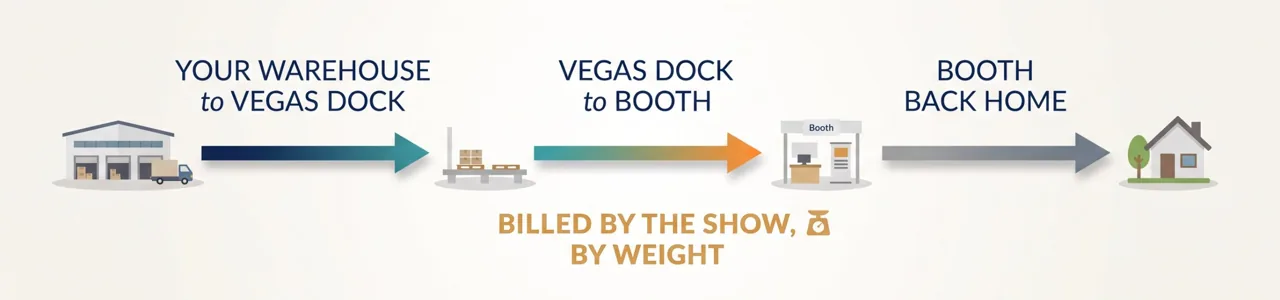
How to estimate it for any show. Find the price per pound and the minimum weight in your exhibitor manual, then multiply by the weight of your packed shipment.
Packed weight × the show's price per pound = your dock-to-booth charge
A real example. CES 2027 lists $0.71 per pound at the Las Vegas Convention Center, with a 100-pound minimum. A 600-pound shipment works out to $426 for that one charge. Prices differ by show and even by room within a show, so look yours up.
Order early and pay less. Most shows publish two prices for the same service: one if you order early, one if you don't. At CES 2027, a 500-watt power outlet at the Convention Center is $115.35 ordered early and $173.05 at the regular price. That is $57.70 saved on one outlet for ordering on time.
The full budget, line by line
Truck to Las Vegas + dock-to-booth charge + booth setup and takedown + power, internet and rentals + truck home + storage
For each line, note whether you have a real quote or a guess.
Source for the examples: CES 2027 topline rates
Try it
Estimate your dock-to-booth charge
Enter your packed weight and the rate from your show's manual.
What ordering early saves
This covers the show contractor's dock-to-booth charge only. Your carrier, installer and power are separate. Check the rate in your own show's manual.
Get a shipping quoteStep 5: Where do I ship the items I need to send ahead of the show?
Short answer
To one of two places. Ship early and it goes to the show's own warehouse. Ship close to the show and it goes straight to the exhibit hall. Your exhibitor manual lists the dates for each.
Option 1: the show's warehouse. Manuals call it the advance warehouse. You ship days or weeks ahead to a warehouse the show contractor runs. They hold your shipment and have it at your booth when setup begins. It only accepts shipments between two dates listed in your manual, and it is not for long-term storage.
Option 2: straight to the exhibit hall. Manuals call this . Your truck delivers to the building during the setup days, on the day and time assigned to your booth. A truck that misses its time may have to wait, and waiting costs money, so ask your shipping company what it charges.
Don't want to work this out for every show? This is the part Juujbox takes off your plate. We keep your booth in our warehouse, work from your show's manual, choose the option that fits, book the truck and get everything there on the right day. Get a quote.
Match your timing to the right option
| When your booth can arrive | Send it to | What to do |
|---|---|---|
| Before the show's warehouse opens | Nowhere yet | Have your supplier hold it, or store it and schedule the delivery for later |
| While the warehouse is open | The show's warehouse | Put the show's warehouse label on every piece and ship |
| After the warehouse's late-fee date | Call the show contractor first | Ask if they will still take it and what it costs, or switch to option 2 |
| During the setup days | The exhibit hall | Give the driver the check-in address and your assigned time |
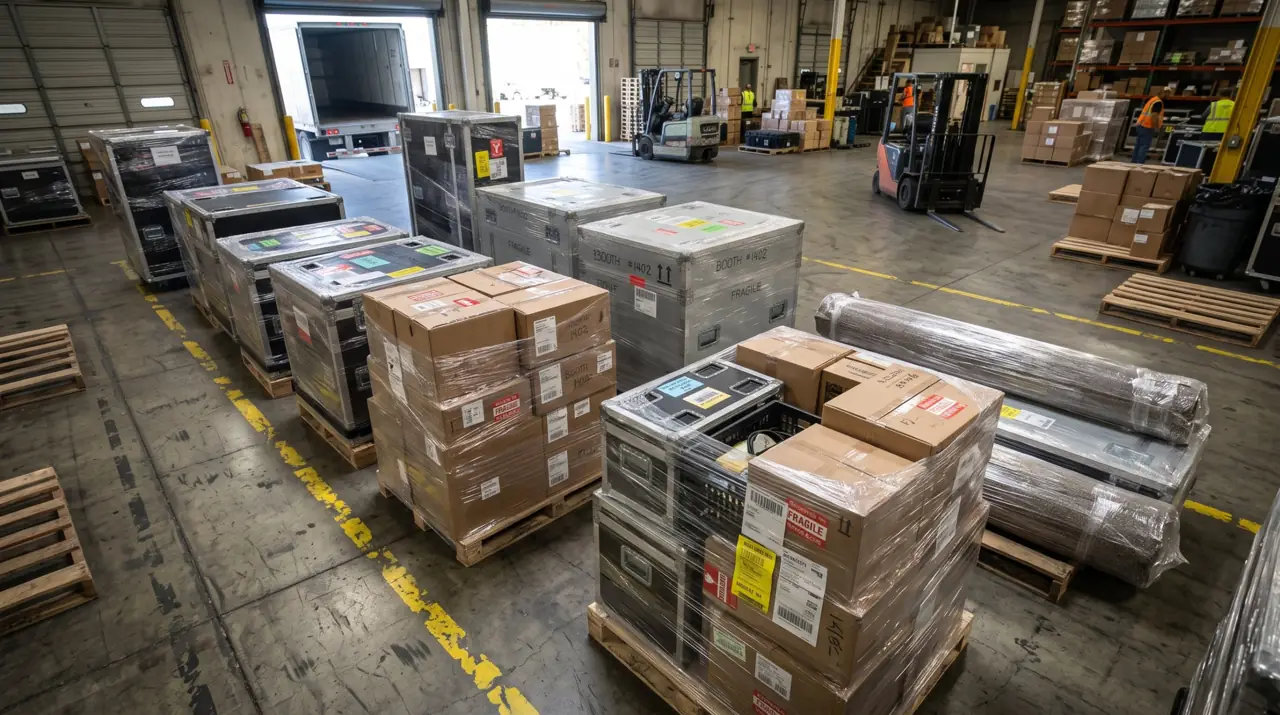
How far ahead does the warehouse open? It varies. At one 2027 Convention Center show it opened about four weeks before setup began, and the late fee started four days before setup. Yours will be in the shipping section of the manual.
Several suppliers shipping to you separately? Give every one of them the same address and dates, and have one person count what arrives.
Source for the example: a 2027 Convention Center show manual
Try it
Which route fits your dates?
Enter the dates from your show's manual.
Based on the dates you entered. Your show's manual is the final word.
Step 6: Can our own team assemble our booth?
Short answer
It depends on where the show is. In the large convention halls, union labor rules generally mean you cannot set up your own booth. At a hotel, sometimes you can. Check your exhibitor manual.
What your own team can do. It depends on the building. Where union labor rules apply, as they do in the large convention halls, the show's crews generally have to set up your booth. At a hotel show, your own team can sometimes do it. Your exhibitor manual spells out what is allowed. If it isn't clear, email the show contractor a photo of your booth and ask, and get the answer in writing.
What the show's crews do. Las Vegas convention halls use union labor. You don't hire a union yourself. You order the work from the show contractor, and they send the crew. Different crews handle different work: Teamsters for building booths and moving shipments, electricians for electrical, and stagehands for staging and lighting.
What a crew costs. The manual lists hourly prices by type of work and time of day. As one example, CES 2027 lists Teamster labor at the Convention Center at $98.50 an hour during regular hours. Ask about minimum hours and when overtime starts.
Can the company that built our booth set it up? Often yes, if it registers with the show first. Manuals call this an . There is a deadline, usually a fee, and the company has to show proof of insurance. Exclusive services still go to the show's own provider.
Before you book a crew
- Send a sketch of your booth showing what your team will do and what the crew will do.
- Schedule the crew for after your shipment is due at your booth, not the same hour.
- Order takedown separately. It is not automatic.
- Ask who signs off on the hours worked.
Source for the example: CES 2027 topline rates
Step 7: What do I need to prepare before the booth ships?
Short answer
Three things: delivery instructions for the trucking company, the show's shipping label on every case, and a packing list for whoever opens the cases at the show.
1. Delivery instructions for the trucking company. At the large halls, a truck going straight to the show doesn't drive up to the building. It checks in first at a waiting lot (manuals call it the ) and is sent to the dock when it's its turn. Your manual gives the address. Send your trucking company three things: the check-in address, your hall and booth number, and your assigned day and time. Arriving early doesn't help. One 2027 show's manual says early trucks may be turned away.
2. The show's label on every piece. The manual includes a shipping label to print. There is one for the show's warehouse and a different one for the hall, so use the right one. Fill in your company name, the show and your booth number, and number each piece: 1 of 7, 2 of 7, and so on. If several boxes are wrapped together on a pallet, label the pallet as one piece and note how many boxes are on it.
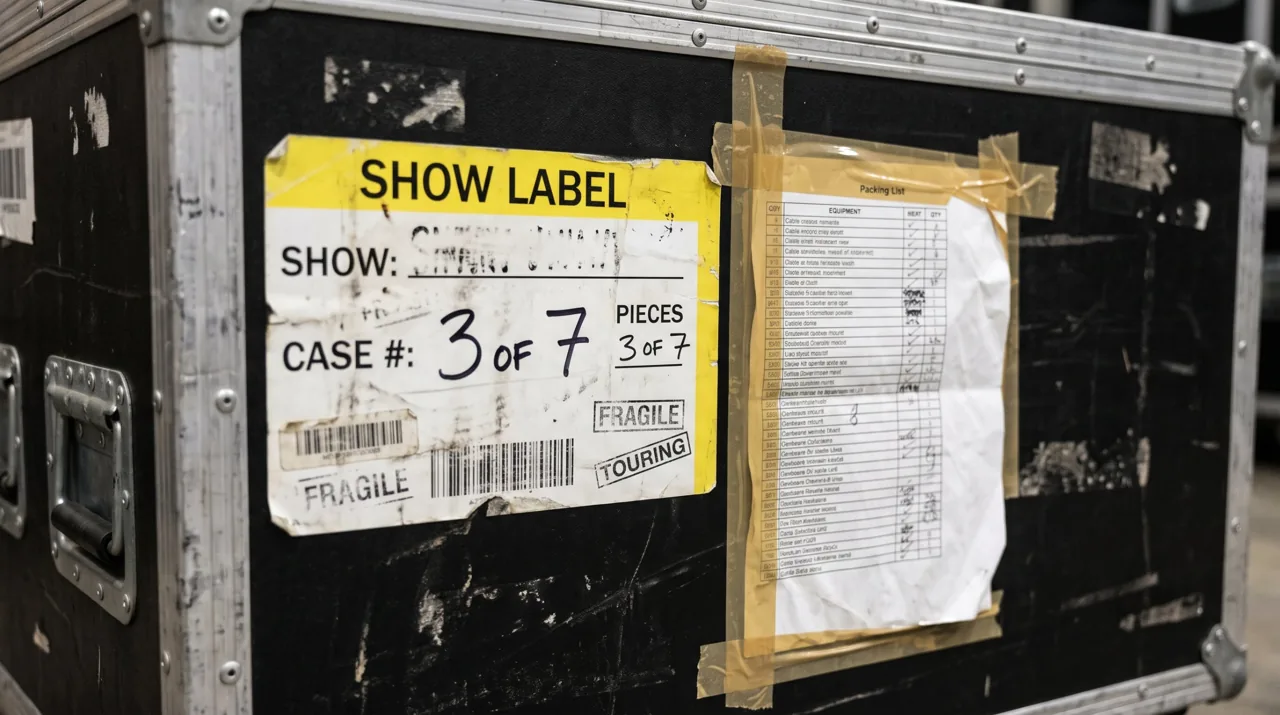
3. A packing list. Write down what is in each case and take photos. Give both to whoever from your team will be at the show, so a missing piece is spotted right away.
Do I have to be there when it arrives? Usually not. Show crews deliver to empty booths all through the setup days, and some manuals say outright that you don't need to be present. Someone still has to check everything before setup starts, so decide who.
Can I just bring it in myself? For a small display, sometimes. A common rule is that full-time employees may carry items in by hand or on their own small two-wheeled cart, and nothing motorized. Every show sets its own limits, so check which entrance, what kind of cart and where you can park before you load the car.
From a Juujbox call
An exhibitor with a booth across the country asked us whether they had to be there in person to send it to Las Vegas. They didn't. What they needed was three names: who hands it to the truck, who receives it in Las Vegas, and who checks it at the booth.
Source for the examples: a 2027 Convention Center show manual
Step 8: My shipment was delivered. Why isn't it at my booth yet?
Short answer
Because the truck drops it at the building's dock, not at your booth. The show's crew then brings it across the floor, and on a busy day that can take hours.
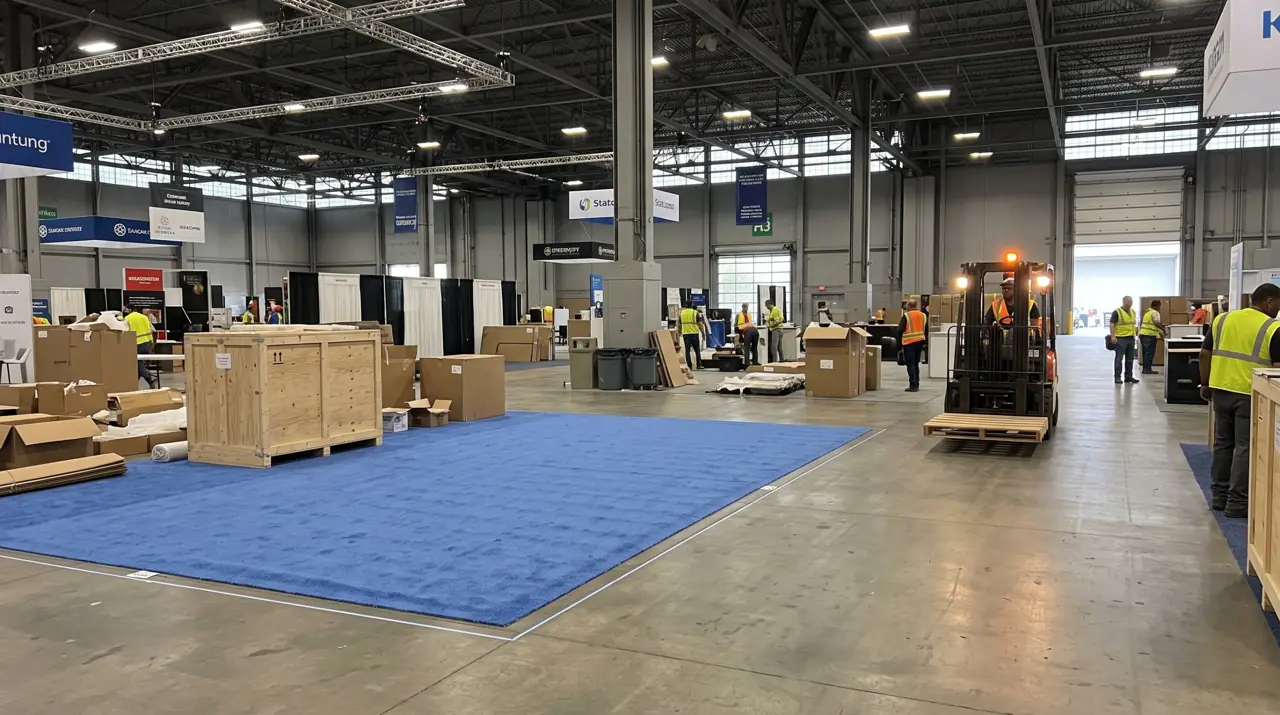
What to do while you wait. First, confirm with your trucking company that the truck checked in. Then go to the show contractor's service desk on the show floor with four things: your booth number, the trucking company's name, the tracking number and how many pieces you shipped. They can tell you where it is.
If tracking says "delivered" and nothing shows up: ask the trucking company for the signed delivery receipt and take it to the service desk. A photo of the case and its label helps the crew find it.
After you unpack. The show's crew collects your empty cases and stores them until the show ends. Before they go:
- Count and photograph every case. Note any damage.
- Check the contents against your packing list.
- Take out what you need during the show: giveaways, tools and your return shipping labels.
- Ask the service desk for "empty" stickers, and ask about storage you can get into during the show if you will need to restock.
Before the show opens
- The power works where you ordered it.
- Your demo runs on the show's internet. Have a version that works offline.
- The badge scanner works. Scan one test badge.
- Everyone on your team knows the hall, the booth number and where the service desk is.
Step 9: When can we leave after the show ends?
Short answer
Once your booth is packed and handed off for pickup. That is often the morning after the show closes, because your empty cases have to be brought back to you first. Plan for one person to stay.
Book your trip home before the show, and don't assume you can leave the night it ends. Three things decide it: when you are allowed to start taking down, when your empty cases come back, and who stays to hand the shipment over.
What usually happens after the show closes
| Order | What happens | What it means for you |
|---|---|---|
| 1 | The aisle carpet is rolled up | Cases can't be brought back until this is done |
| 2 | Small boxes and cases are returned | Often the same evening |
| 3 | Large crates are returned | Often later, sometimes the next morning |
| 4 | Your trucking company picks up | There is a deadline, sometimes a day or two later |
| 5 | The hall has to be empty | Anything left is shipped out by the show contractor |
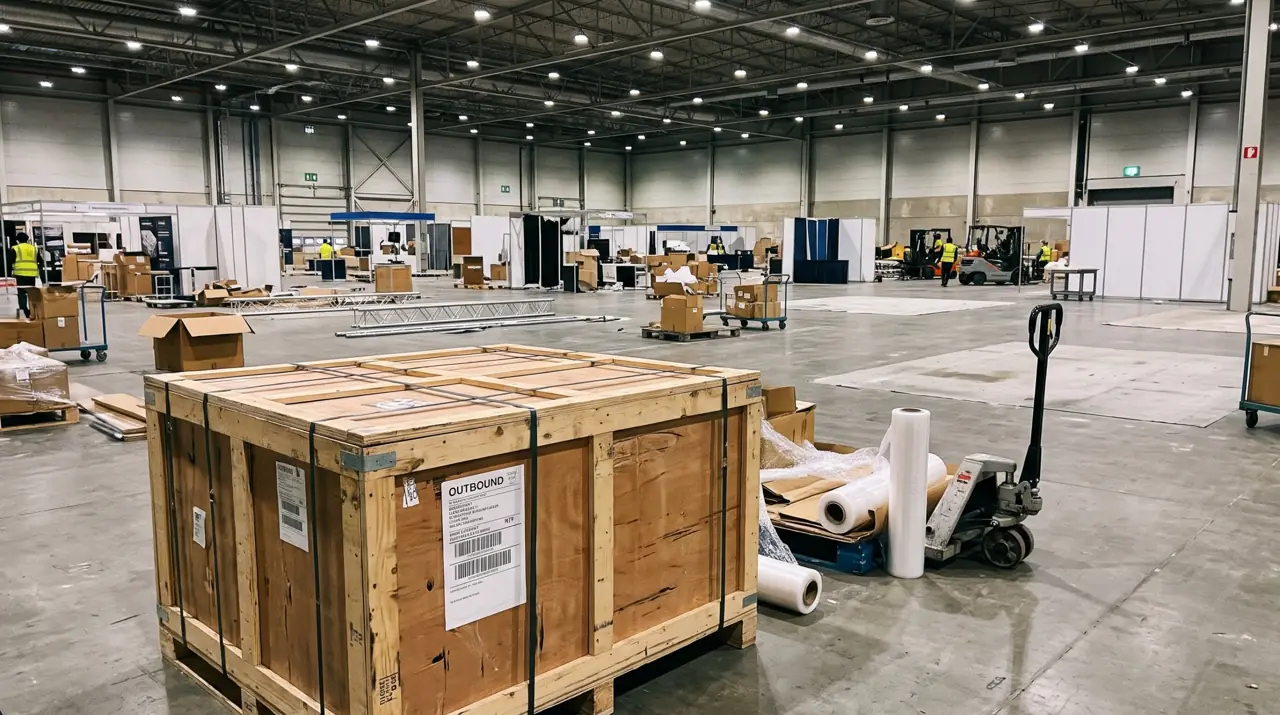
A real example: one 2027 Convention Center show closes at 5 PM on a Thursday. Small boxes are due back by midnight and crates by 10 AM Friday. Someone on a Thursday night flight would leave before the crates are back. At a show spread across several buildings, like CES, each hall has its own schedule, so check the one for your hall.
The form that releases your booth. Before you leave, fill out one form saying how many pieces you have, which trucking company is picking up and where it is going. Manuals call it a or material handling form. Filling it out does not book the truck; you arrange that with your trucking company yourself. Turn the form in at the service desk, not on your crates, and keep proof that they received it.
If your trucking company misses the deadline, the show contractor can send your shipment with a company it chooses. Leave whoever stays behind the trucking company's phone number, the deadline and the name of who can approve a backup plan.
Send this to your team before you leave
Booth [number] is packed: [number] pieces. [Trucking company] is picking up, tracking number [number]. The service desk has our form. [Name] is following up until pickup is confirmed.
Sources for the examples: a 2027 Convention Center show manual · CES 2027 exhibitor manuals
Step 10: Where should the booth go after the show?
Short answer
Toward wherever you need it next: your next show, storage, or back home. Decide before the show ends, because the return label has to say where it is going.
Storage that looks cheap can cost more once you add the extra trips to get there and back.
| If your next show is | Compare |
|---|---|
| Also in Las Vegas | Storing it in or near Las Vegas until then |
| In another city | Shipping it straight to that show against bringing it home first |
| Not booked yet | Bringing it home against storing it with a company that can ship it to your next show |
When you compare prices, include pickup, checking the contents, the minimum storage period and delivery to the next show.
Check it before it's put away. Have whoever receives the booth compare it to your packing list and note what is missing, damaged or needs restocking. One team we know was running several events at once. They found out a backdrop never came back when they tried to order it for the next show.
From a Juujbox call
A caller had one crate in California and a Vegas show coming up. Partway through the call they realized the crate might need to stay in Vegas for a second event. That changed the whole plan.
What Juujbox does for a Vegas exhibitor
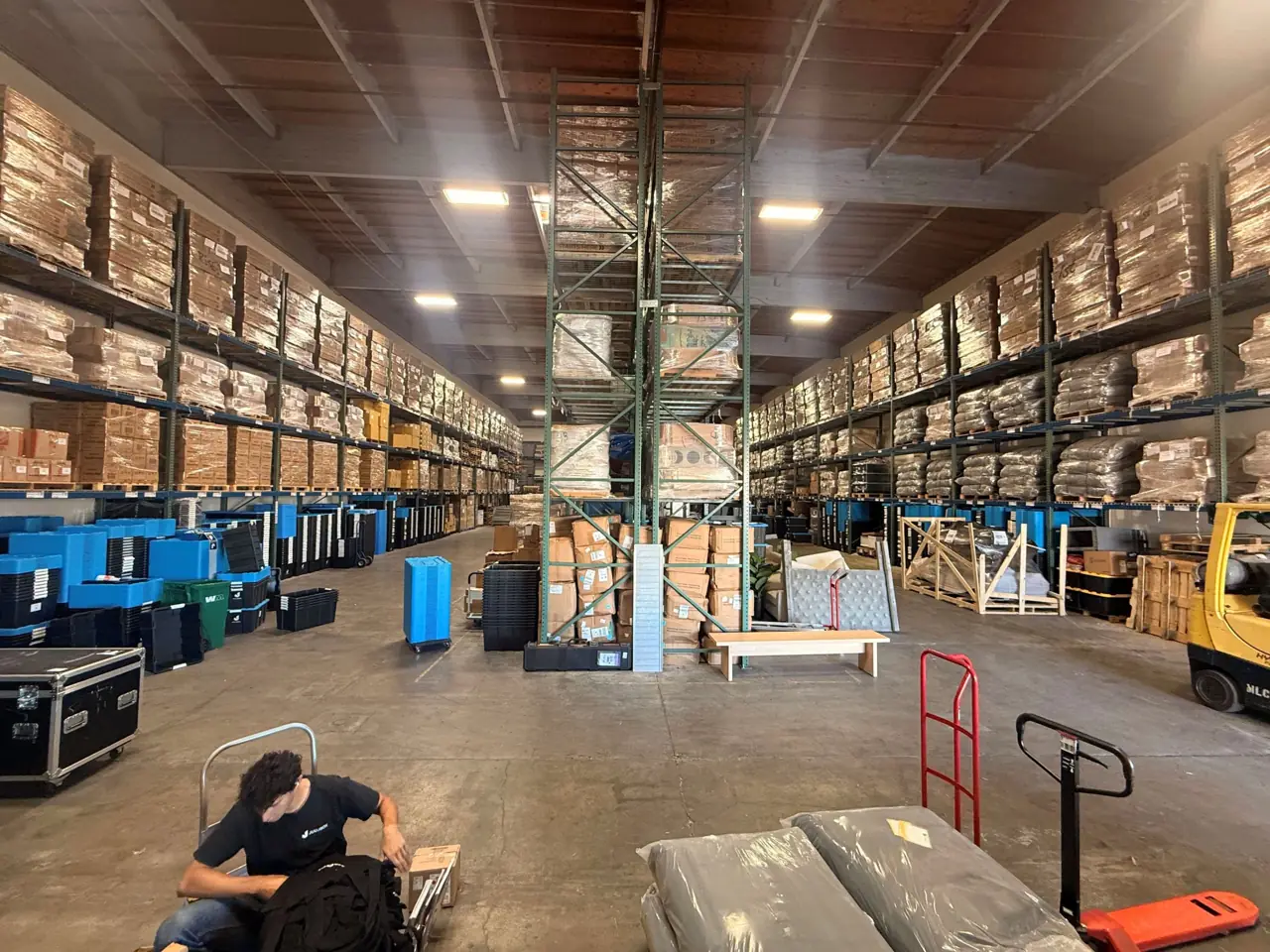
We store and inventory your booth in San Diego, then get it to your Las Vegas show and back. We choose the trucking company for each trip. Tell us which show you're in, where the booth is now, roughly how big and heavy it is, and where it goes afterward. We'll send a quote that shows trucking, warehouse work and the show's own charges as separate lines. Every fee is published on our rates page.
Get a Booth Shipping Quote
Exhibiting at CES
CES runs across several buildings at once, each with its own rules. Everything above applies. These are the differences.
- Start with your building. CES publishes a separate exhibitor manual for each venue: the Convention Center, Venetian Expo, the Venetian suites, ARIA, Mandalay Bay and Fontainebleau. Rules and rates in one do not carry to another.
- Then find your hall. At the Convention Center alone, the West, North, Central and South halls and the meeting rooms each have their own setup and move-out schedules.
- Use the published rates to budget early. CES posts headline rates before the full manuals are out.
CES 2027 published rates, Las Vegas Convention Center
$0.71 per pound
Dock-to-booth handling, 100-pound minimum
$0 up to 30 lb
Small packages
$115.35 early · $173.05 regular
500-watt outlet
$98.50 per hour
Teamster labor, regular hours
CES says show contractor rates for 2027 are 3% above 2026, with dock-to-booth handling held flat.
Source: CES 2027 exhibitor manuals and topline rates. Rates checked November 20, 2026.
Plain-English glossary
The manual uses these words. Here is what they mean.
| The manual says | It means |
|---|---|
| General service contractor, official contractor, decorator | The company the organizer hired to run the show floor. Named on page one of your manual. |
| Exclusive service | Work only one named provider is allowed to do at that show or in that building. |
| Material handling, drayage | The charge to move your shipment from the dock to your booth and back out. Billed by weight. |
| Advance warehouse | The show contractor's warehouse that accepts your shipment before move-in. |
| Direct to show site | Shipping straight to the hall, to arrive at an assigned time. |
| Target date, targeted move-in | The day and time your booth's shipment is assigned to arrive. |
| Marshaling yard | The lot where trucks check in and wait before they're sent to the dock. |
| EAC (exhibitor-appointed contractor) | An outside company you hire to work in your booth, approved by the show. |
| I&D | Install and dismantle. Setup and teardown labor. |
| Empties | Your empty cases and crates, stored during the show and returned after it closes. |
| Bill of lading, outbound material handling form | The form that tells the contractor which pieces to release, to which carrier, going where. |
| Forced freight, reroute | What happens when your carrier misses the deadline: the contractor ships it with a carrier it picks. |
| Hand-carry | Bringing items in yourself, within the show's limits on who and what kind of cart. |
Copy-and-paste kit
All four templates in one place.
Show sheet
Show and year · building and hall · booth number · company name on the contract · delivery date · opening day · person in charge at the show · show contractor's help desk · move-out deadline
Before you pay for a service
Is this service exclusive at my show, or can I use my own vendor? What is included in the price, and what is billed extra?
Budget lines for finance
Truck to Las Vegas + dock-to-booth charge + booth setup and takedown + power, internet and rentals + truck home + storage
Handoff text before you leave the hall
Booth [number] is packed: [number] pieces. [Trucking company] is picking up, tracking number [number]. The service desk has our form. [Name] is following up until pickup is confirmed.
Juujbox eliminates the friction of managing and shipping your trade show assets.
We store your booth, displays and promotional items in our San Diego warehouse, keep an online inventory of everything you own, and ship it to any show in the country and back. You don't have to learn the rules in this guide for every show. We handle them for you.
Get a quote